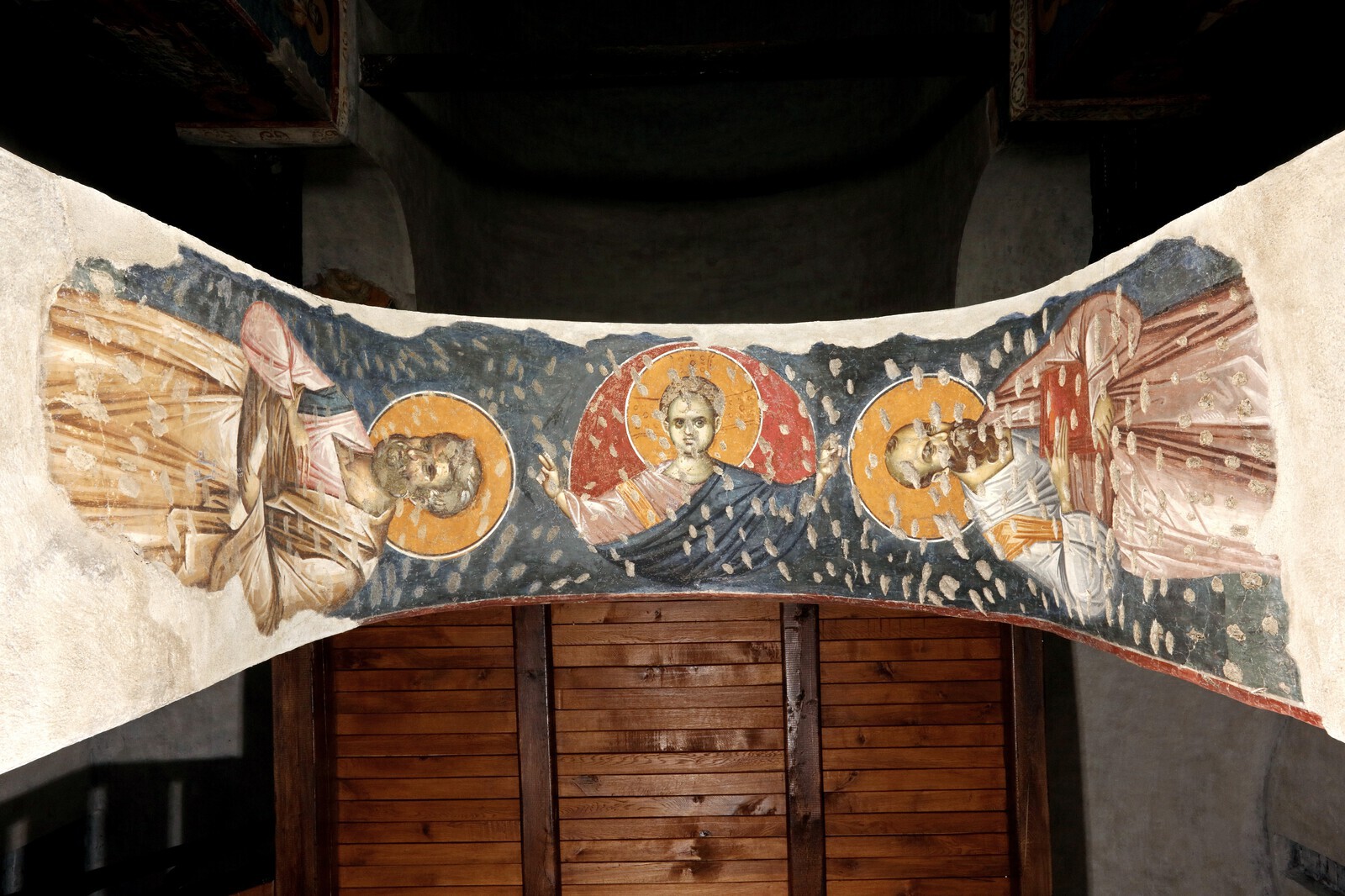
On this day, June 29 according to the Julian Calendar (July 12 civil calendar), the Georgian Orthodox Church commemorates the Holy Glorious, All-Praised Chief Apostles Peter and Paul, who gave their lives for the faith in Rome in approximately the year 67 AD.
The Holy Apostle Peter (Simon) was born in Galilee, the son of Jonah, a fisherman. His brother Andrew the First-Called first encountered the Lord and brought Simon to Jesus (John 1:41-42). One evening, as Peter was fishing on the Sea of Galilee with James and John, weary and discouraged after a fruitless night, the Lord told him to cast his net once more. Peter obeyed in faith, and a great multitude of fish filled the net so that it began to break. Shaken by this miracle, Peter fell at the Lord’s feet saying, “Depart from me, for I am a sinful man, O Lord.” But the Lord said: “Do not be afraid; from now on you will be catching men.”
Peter became the leader and spokesman of the Twelve Apostles. It was he who first confessed: “You are the Christ, the Son of the living God” (Matthew 16:16), for which the Lord gave him the name Peter (meaning “rock”) and promised that upon this confession He would build His Church. At the Transfiguration, at the raising of Jairus’s daughter, and at the Garden of Gethsemane, Peter was among the three disciples closest to the Lord.
After the Crucifixion, Peter denied the Lord three times during the night of His arrest — a grievous fall that he bitterly repented with tears. After the Resurrection, Christ appeared to Peter individually and three times asked: “Do you love Me?” restoring him to apostolic dignity and entrusting him with the care of the Church. On the day of Pentecost, it was Peter who stood and preached boldly to the crowds, and through his sermon three thousand souls were added to the Church.
Peter preached the Gospel throughout Palestine, Samaria, Pontus, Galatia, Cappadocia, Asia, and Bithynia, and eventually came to Rome. There, by order of the emperor Nero, he was crucified — at his own request, upside down, counting himself unworthy to die in the same manner as his Lord. His first and second epistles are preserved in the New Testament.
The Holy Apostle Paul, formerly called Saul, was born in Tarsus of Cilicia from the tribe of Benjamin, a Pharisee and Roman citizen. He was educated at the feet of the great teacher Gamaliel in Jerusalem and at first was a fierce persecutor of the Church, consenting to the stoning of the Protomartyr Stephen and seeking to destroy the nascent Christian community.
On the road to Damascus, where he was traveling to arrest Christians, the risen Lord appeared to Paul in blinding light, saying: “Saul, Saul, why are you persecuting Me?” Paul fell to the ground, was struck blind for three days, and after being baptized by Ananias, received his sight. This miraculous conversion transformed the greatest persecutor of the Church into its most zealous missionary.
Paul undertook three major missionary journeys throughout Asia Minor, Greece, Macedonia, and beyond, establishing Christian communities in city after city. He was beaten, imprisoned, shipwrecked, and faced constant dangers, yet nothing could stop his proclamation of Christ. He wrote fourteen epistles that now form a foundational part of the New Testament and are read to this day in every Orthodox church.
Paul was also brought to Rome and, being a Roman citizen, was beheaded by the sword under Nero. Luke, the author of the Gospel and the Acts of the Apostles, was among his disciples.
The holy Peter and Paul so distinguished themselves among all the disciples of Christ by their labors and witness that the Church has called them the Chief Apostles and appointed one day for their feast, celebrating their glorious memory together.
May the intercessions of the Holy Glorious and All-Praised Chief Apostles Peter and Paul be with us all.