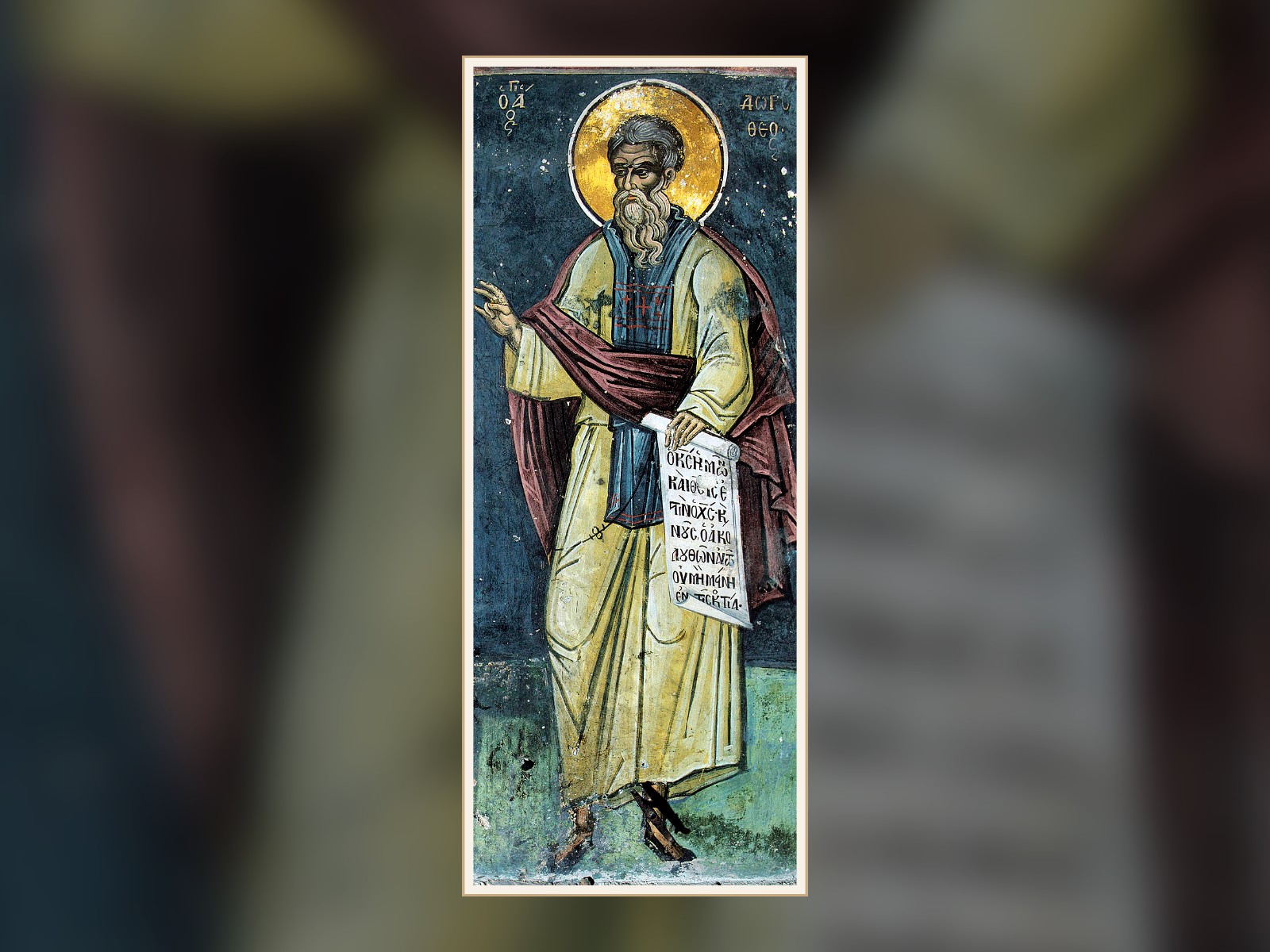
On this day, June 5 according to the Julian Calendar (June 18 civil calendar), the Georgian Orthodox Church commemorates the Venerable Abba Dorotheus of the Monastery of Serida (reposed c. 620).
The Venerable Abba Dorotheus (6th century) was a disciple of Saint John the Prophet (commemorated February 6) and labored in Palestine at the monastery of Abba Serida.
In his youth, the future saint diligently pursued learning. “At first, studying was very burdensome to me,” he later recalled. “When I approached a book I had the feeling of falling into the jaws of a beast. But when I forced myself, the Lord helped me, and I grew so accustomed to it that from the warmth I felt while reading, I forgot what I was eating, what I was drinking, and how I slept. No one could draw me away to dine with any of my friends, and I would not even go out to converse with them because of my reading, though I loved them all very much. When the philosopher would dismiss us, I would go home not knowing what I would eat, for I begrudged spending time on preparing a meal.” In this way Abba Dorotheus absorbed bookish wisdom. With still greater zeal did the saint take up monastic labors after going out into the desert. “When I came to the monastery,” he wrote, “I said to myself: if you found so much love and warmth for outward wisdom, you ought to have even more for the virtues! — and this strengthened me.”
The primary task of Venerable Dorotheus in the monastery was to receive and accommodate pilgrims who came there. With the resources of one of the brethren, the Venerable Dorotheus built a hospital in which he himself served as one of the attendants. He recalled: “I had just been released from heavy labor when, toward evening, wanderers came to the monastery. I spent the whole evening with the guests. Afterward came caravaneers. I prepared everything that was necessary for them as well. It often happened that I was awakened as soon as I had lain down to sleep, and meanwhile the time for the night vigil prayers would also be approaching.” To combat sleep, Abba Dorotheus asked one brother to wake him at the beginning of the services, and entreated another not to allow him to doze during the prayers. “And believe me,” said the holy father, “I held these monks in such honor as though my salvation depended on them.”
For ten years the Venerable Dorotheus was the obedient disciple of John the Prophet. He had already been sincerely confessing his thoughts before the holy father; now he entrusted himself entirely to his will and felt no grief at all. Yet he feared that he might not please the Lord, who promises salvation to those who bear sufferings completely, but the elder reassured him: “Do not grieve, you have nothing to fear; those who remain in obedience to the fathers are blessed in their freedom from care and their peace.” The Venerable Dorotheus counted it his greatest happiness to serve the stalwart ascetic. Besides receiving the teachings of the monastery of Abba Serida, Abba Dorotheus visited other great fathers of his time, including Abba Zosimas, and eagerly listened to their instructions.
After the repose of the Venerable John the Prophet, Dorotheus departed from the monastery of Abba Serida and founded his own skete, which he wisely governed until his death. To the holy father belong twenty-one discourses, several epistles, and eighty-seven questions with written answers from the Venerable Fathers Barsanophius the Great and John the Prophet; also preserved in manuscript form are thirty ascetical sermons and a record of the teachings of Abba Zosimas. The works of Abba Dorotheus are filled with great spiritual wisdom and are distinguished by a clear, refined style, simple and accessible to all. The holy father frequently referred to the counsels of Basil the Great, Gregory the Theologian, and Gregory of Nyssa. Obedience and humility, combined with deep love for God and neighbor — these are the virtues without which spiritual life is impossible. This thought pervades all his writings. Through them the personality of the author is clearly visible, whom the Venerable Dorotheus (commemorated February 19) describes as follows: “In his relations with his fellow monks he was modest, obedient, gentle; pride and insolence were foreign to him. He was characterized by goodness and simplicity; in disputes he was accustomed to yielding, which is the source of humility, goodwill, and the harmony sweeter than honey — the mother of all virtues.”
The teachings of Abba Dorotheus are a trustworthy guide for those who have set out on the path of spiritual struggle, and for all who sincerely desire salvation.
May the intercessions of the Venerable Abba Dorotheus of the Monastery of Serida be with us all.